PJNontheGo: Building a Pro-Palestinian Justice Ministry in a Fearful or Unsympathetic Episcopal Parish or Diocese
9 April 2026
Melissa Yarbray shared her vision on 4/9/26. My commitment to addressing Palestinian suffering began over 50 years ago while studying at the American University of Beirut (1969–70). There, I heard firsthand accounts from Palestinians about the torture and trauma their families endured—displacement, loss of homes and livelihoods, and violence during 1948 and 1967. The presence of refugee camps near campus made visible an injustice I did not yet fully understand.
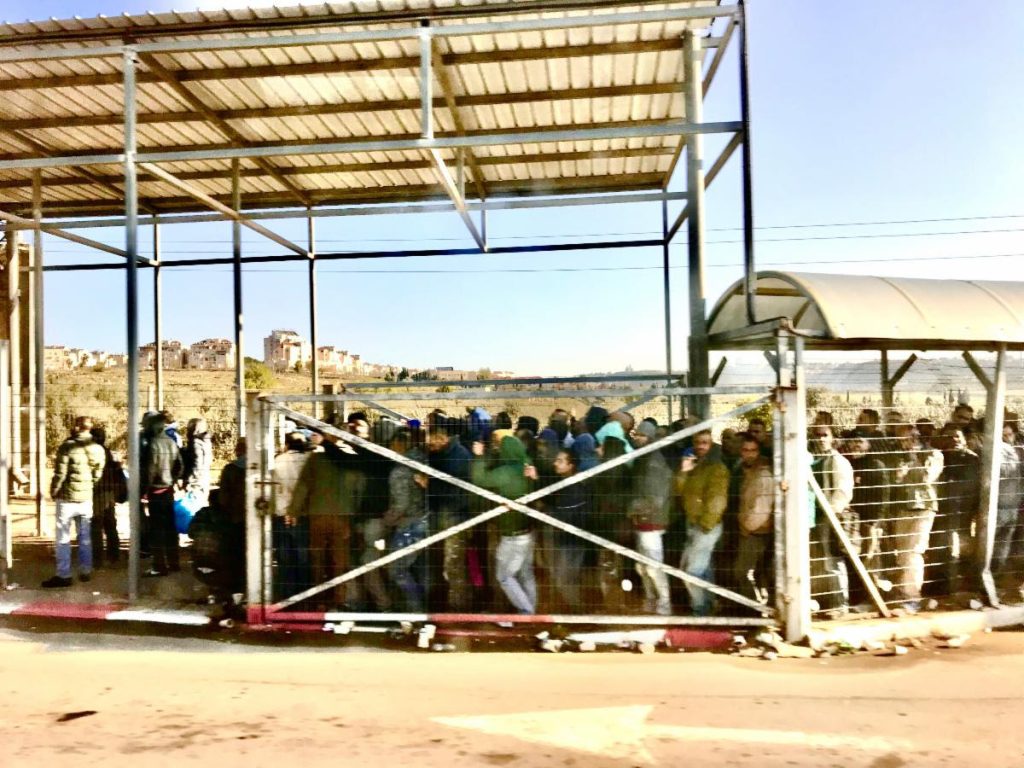
Visits to the Holy Land in 2009 and 2019 deepened my passion for justice. Staying in Bethlehem, meeting local pastors and human rights organizations, witnessing checkpoints, different license plates and laws for Palestinians, revealed daily realities of living under military occupation. What I had studied for years became undeniable and urgent. I saw how dominant narratives prioritize Israeli security while Palestinian voices and lives are marginalized .
These experiences strengthened my resolve to foster awareness and action within my own community. At St. Margaret’s Episcopal Church, Diocese of San Diego, I discovered their Compassion and Justice Ministry, which called for advocacy on behalf of immigrants, refugees, and “Muslims”, with a commitment to “replacing fear with facts”. With the support of a new Rector, I began a discussion of adding “Voices for Peace in the Holy Land” as part of that ministry—taking the first steps toward creating space for truth, education, and faithful action.
Key principles for building a parish ministry promoting a just peace.
Building Relationships is the entry point. Connect with a vestry member, clergy, or any individuals who are open to the topic. Spending time with the Rector, describing my background and vision, along with educational materials, was most beneficial. Educate yourself on communicating around controversial topics with respect and active listening, using resources available on-line.
Initiating Interest:
begin with bulletin notices that include news from the Episcopal Diocese of Jerusalem , AFEDJ , Palestinian pastors, FOSNA , EPF- PJN , Churches for Middle East Peace and the Episcopal News Service. My first bulletin notice invited parishioners to attend a new group to raise questions, share experiences with the issue, and learn how American Christians can contribute to peace in the Holy Land. Other good proposals: a book study or a film discussion. Build on early activity to form a committee and nurture trust.
Start small, and maintain patience.
Build interest through tangible, educational, and non-threatening events. Over time, patience becomes a strategy, not a luxury. To raise interest, consider selling products from the Holy Land – Palestine olives with pamphlets about its history, alongside olive-wood carvings– with a clear statement that proceeds support EDOJ through AFEDJ. Highlight the Good Friday offering each year.
Education:
from my experience, the #1 priority for success is parish education, especially because many people only know the issue through U.S. media or church narratives that avoid naming Palestinian suffering. They are hearing “Israel” weekly in liturgy and Bible studies without clarification of the difference between Israel in the Bible and the current State of Israel There are excellent curricula available from the denominations, such as Why Palestine Matters.
Curriculum tips:
- Provide resource lists, books, films, credible definitions of terms like apartheid, ethnic cleansing, occupation, with lists of news sources that report honestly.
- Clearly distinguish between Judaism and Zionism.
- Study the several definitions of antisemitism, to avoid confusing criticism of a government’s policies with hatred toward Jews.
- Stress the role of Christian Zionism and how it shapes interpretations of “the Holy Land.”
Voices: bringing Palestinian and Jewish perspectives into the same room.
Palestinian voices can speak directly from experience. Via Facebook and social media, local Palestinians, Jews and Muslims have been drawn to our parish meetings. Invite Jewish voices that oppose injustice and challenge harmful policies. Recently our Jewish member led a book study on 100 Years War on Palestine. Have meetings/forums that make space for both fears and grief, especially during major escalations when people are carrying pain. One successful example was a brunch after Sunday service a few weeks after Oct. 7, 2023. A Jewish Voice for Peace speaker shared “Peace, Propaganda, and the Holy Land.” Attendance showed that the “too dangerous to ask questions” assumption is wrong—people come when the format is careful and the tone respectful, despite disagreements.
Common Obstacles: The biggest barriers are often inside church culture, such as disapproval by clergy or vestry. There is fear of losing parishioners, pledges, or offending Jewish friends. There is fear of being labeled antisemitic or being charged with supporting “terrorists.” There is fear of the unknown, expressed in the notion that churches should be active in ‘local issues’ and rely on prayers/ offerings to address Holy Land injustices, despite U.S. taxes supporting war.
Fear is a practical reality: clergy and parish leaders may resist naming the system clearly. But when Palestinian pastors insist on naming apartheid/ occupation/ethnic cleansing accurately, that instruction reshapes the ministry’s integrity. Justice work cannot be honest while avoiding precise language. Study Rev. Munther Isaac, Mitri Raheb, Father Fadi Diab of St. Andrew’s Episcopal Church in Ramallah, Holocaust survivors including Norman Finkelstein, and many others who are Jewish and speaking up against Israel’s illegal policies.
If our Baptismal Covenant is to be real, it must move beyond sympathy, thoughts and prayers into action—especially when the “other” is being treated as less deserving of dignity. Building a Palestinian justice ministry in an Episcopal parish is not an interruption of faith; it is how faith becomes accountable.
Leave a Reply
Want to join the discussion?Feel free to contribute!